
Search
The film and television encyclopedia
Explore the encyclopedia
5525 results
Works shown : 1273–1296 / 5424.
Explore data for this selection
The selection in perspective
Works shown here by decade. This describes this catalogue, not world production or film popularity. Series use their first broadcast year.
- 1910–19197 works
- 1920–192951 works
- 1930–1939102 works
- 1940–1949129 works
- 1950–1959202 works
- 1960–1969277 works
- 1970–1979312 works
- 1980–1989447 works
- 1990–1999735 works
- 2000–20091282 works
- 2010–20191399 works
- 2020–2029481 works
- Shortest
- 6 minKid Auto Races at Venice
- Median runtime
- 110 min4189 documented films
- Longest
- 432 minWar and Peace
Calculated from cited-edition runtimes, including approximate values; series and unknown runtimes excluded. The median divides films into two halves by runtime. Decade links open the full catalogue.
How much time for a film?
Each documented film is counted once in a range. Counts and bars describe only films in this selection with a known runtime.
- 100 min or less
1240 / 4189 1240 - 101–139 min
2464 / 4189 2464 - 140–179 min
406 / 4189 406 - 180 min or more
79 / 4189 79
Runtimes refer to cited editions and may be approximate. Allow separately for breaks and discussion. Links below open the full catalogue filtered by runtime.
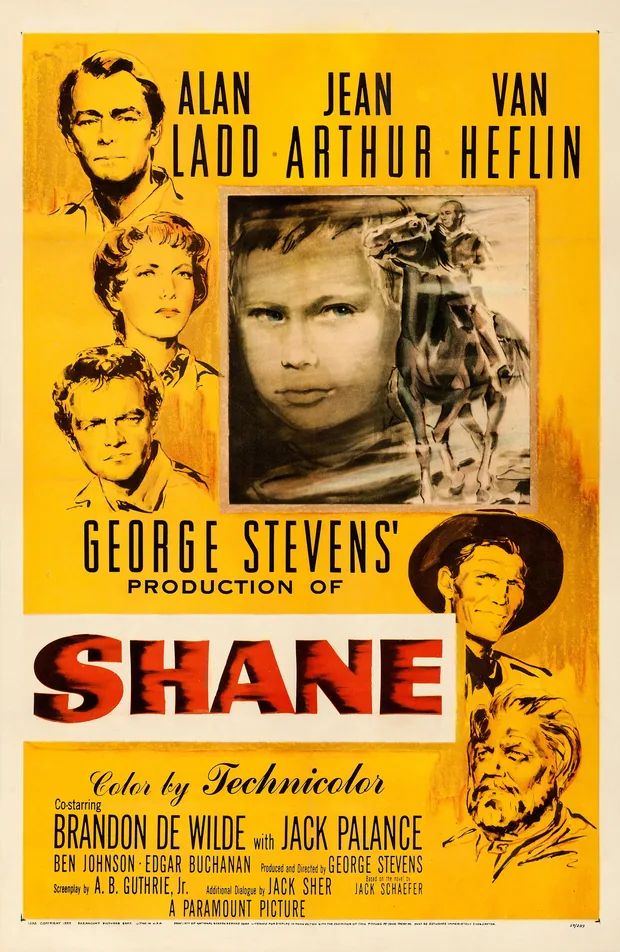
Shane
George Stevens
1953 film directed by George Stevens
The Princess Diaries
Garry Marshall
2001 film directed by Garry Marshall
The Man in the Iron Mask
Randall Wallace
1998 film by Randall Wallace
1933Duck SoupPoster unavailable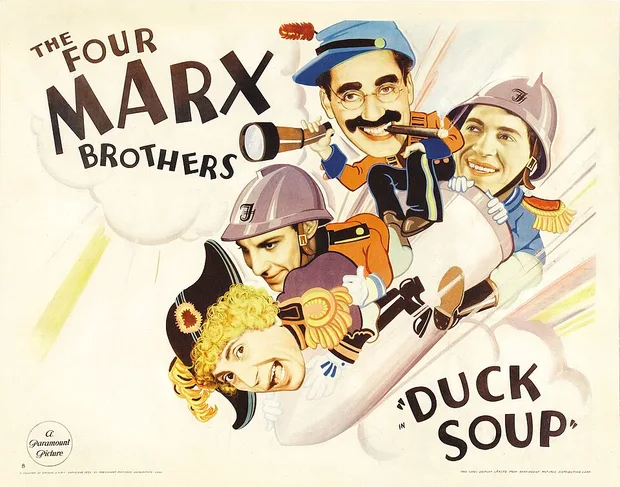
Duck Soup
Leo McCarey
1933 film directed by Leo McCarey
True Romance
Tony Scott
1993 film by Tony Scott
Anatomy of a Fall
Justine Triet
2023 film directed by Justine Triet
Alexander Nevsky
Sergei Eisenstein / Dmitri Vasilyev
1938 film by Sergei Eisenstein, Dmitri Vasilyev
Ratchet & Clank
Kevin Munroe / Jericca Cleland
2016 film by Kevin Munroe
Cloverfield
Matt Reeves
2008 film directed by Matt Reeves
After Earth
M. Night Shyamalan
2013 film directed by M. Night Shyamalan
Miller's Crossing
Ethan Coen / Joel Coen
1990 film by Coen brothers
Oliver!
Carol Reed
1968 film directed by Carol Reed
The Expendables 3
Patrick Hughes
2014 film directed by Patrick Hughes
The Man from U.N.C.L.E.
Guy Ritchie
2015 film directed by Guy Ritchie
Zathura: A Space Adventure
Jon Favreau
2005 film directed by Jon Favreau
Ida
Paweł Pawlikowski
2013 film directed by Paweł Pawlikowski
Everest
Baltasar Kormákur
2015 film directed by Baltasar Kormákur
The Age of Adaline
Lee Toland Krieger
2015 film directed by Lee Toland Krieger
10,000 BC
Roland Emmerich
2008 film directed by Roland Emmerich
The Legend of Tarzan
David Yates
2016 adventure film directed by David Yates
Jason Bourne
Paul Greengrass
2016 film directed by Paul Greengrass
The Great Wall
Zhang Yimou
2016 film by Zhang Yimou
17 Again
Burr Steers
2009 film directed by Burr Steers
Hairspray
Adam Shankman
2007 film by Adam Shankman
Practical guides
 AI-generated illustration01
Choose a streaming subscription
Choose a subscription by starting with the films and series you want to watch, then check their inclusion in your local plan. Compare devices, advertising, audio tracks and total…
Read guide ↗ AI-generated illustration02
Find where to watch a film legally
To find where to watch a film legally, identify its title, year and version first. Then check the official service in your country for included access, rental or purchase: a…
Read guide ↗ AI-generated illustration03
Understand 4K, HDR and picture quality
Resolution, HDR and compression quality describe different aspects of an image. Before changing your plan or display, check the source, title, playback settings and compatibility…
Read guide ↗ AI-generated illustration04
Original audio, dubbing, subtitles and audio description
Original audio, dubbing, subtitles and audio description are separate choices. Check the tracks for the exact title on your device, then test a dialogue scene before viewing.
Read guide ↗ AI-generated illustration05
Prepare offline viewing
Offline viewing requires an app that allows downloading your chosen title. Check device support, free storage and expiry, then test playback without a network before leaving.
Read guide ↗ AI-generated illustration06
Choose a family film
Choosing a family film means checking its content, local rating and each viewer’s sensitivities. Animation or an older release does not guarantee suitability for children;…
Read guide ↗ AI-generated illustration07
Analyse a film without losing enjoyment
To analyse a film, start with an observable detail: a position in the frame, a sound or a cut. Describe it before interpreting it, then compare it with another moment in the film.
Read guide ↗ AI-generated illustration08
Start a series and avoid spoilers
Before starting a series, identify its starting point and episode order, then check the seasons offered by your service. Avoid spoilers by reading practical information without…
Read guide ↗ AI-generated illustration09
Rental, purchase or subscription: which to choose?
Rental suits a specific screening; compare subscriptions using titles actually included and months used. For a digital purchase, check access terms: it does not necessarily…
Read guide ↗ AI-generated illustration10
Watch a documentary critically
A documentary presents a viewpoint through its sources, framing and editing. Separate what is filmed, what is claimed and what evidence supports it, rather than treating an…
Read guide ↗ AI-generated illustration11
Prepare a home film screening
To prepare a home screening, check the title, runtime, tracks and playback on your chosen device. Allow time for setup, breaks and discussion, then test sound and picture before…
Read guide ↗ AI-generated illustration12
Live TV, catch-up and FAST channels
Live TV follows a schedule, while catch-up lets you choose a programme after broadcast within its access window. FAST channels are linear and ad-funded; check any on-demand…
Read guide ↗ AI-generated illustration13
Buffering streams: a practical diagnosis
If streaming stalls, note the error code and check whether it affects one title, one device or the whole connection. Test one variable at a time before reinstalling an app, then…
Read guide ↗ AI-generated illustration14
Manage renewals and cancellations
To cancel a subscription, first identify the service, store or operator billing you. Follow its procedure and keep confirmation and the access end date; deleting the app does not…
Read guide ↗ AI-generated illustration15
Audio description and accessible subtitles
Audio description describes story-relevant visual details; accessible captions can identify voices and sounds. Check these options for the exact title, language and device, then…
Read guide ↗ AI-generated illustration16
Cuts, restorations and editions: choose a version
To choose an edition, compare cut, runtime, framing, language and restoration source. One title can cover several versions: higher resolution alone does not establish that they…
Read guide ↗ AI-generated illustration17
Drawn animation and stop-motion: seeing materials
To watch animation closely, observe how material, drawing or volume changes between images. Compare movement, texture and rhythm without reducing techniques to a contrast between…
Read guide ↗ AI-generated illustration18
Free streaming: compare access models
A free service may use advertising, scheduled channels or a catalogue limited by time and country. Before planning a screening, check the official site, access terms and the exact…
Read guide ↗ AI-generated illustration19
Discover silent cinema
Silent cinema also unfolds through gestures, intertitles and the musical accompaniment of your edition. Check the restoration, playback speed and score: two editions can create…
Read guide ↗ AI-generated illustration20
Watch a black-and-white film
Watching black-and-white cinema means following contrast, textures and the separation of planes through light. Describe a bright area and a dark area before assigning symbolic…
Read guide ↗ AI-generated illustration21
Picture formats: preserve the frame
To preserve a film’s framing, respect its aspect ratio and avoid zoom settings that crop the edges. Black bars can be normal: compare the edition’s ratio with your screen’s ratio.
Read guide ↗ AI-generated illustration22
Listen to a film: voices, music and effects
To listen closely to a film, separate voices, ambience, effects and music, then notice their entrances and silences. Ask what a sound suggests beyond the frame and who can hear it…
Read guide ↗ AI-generated illustration23
Choose a film for your available time
To choose a film for your available time, subtract breaks and discussion first, then compare the edition’s runtime. Approximate runtimes need a margin; check series timing per…
Read guide ↗ AI-generated illustration24
Discuss a film after viewing
A film discussion benefits from starting with a specific scene rather than an overall verdict. Separate observed detail, personal response and interpretation, then listen to other…
Read guide ↗ AI-generated illustration25
Understand editing without jargon
To understand editing, observe what changes between two shots: place, time, movement, gaze or sound. Describe the transition and the information it adds or withholds before…
Read guide ↗ AI-generated illustration26
Fiction, documentary and re-enactment
Fiction, documentary and reconstruction differ in their relationship to events and how they present sources. Identify who films, who narrates and what is reenacted; a realistic…
Read guide ↗ AI-generated illustration27
Explore world cinema
To explore world cinema, start with a work and its production references, then compare specific forms and contexts. Production country, language and story setting are different…
Read guide ↗Platforms

Netflix
Films, series and original productions.

Disney+
Disney worlds, animation and franchises.

Prime Video
Distinguish subscription titles from purchases and rentals.

Apple TV
Distinguish the subscription from other content in the app.

MUBI
A cinema selection with an editorial perspective.

ARTE
Films, documentaries and cultural programmes; territorial rights apply.

The Criterion Channel
Film heritage and thematic programming; check your territory.

france.tv
French public broadcasting; check account and territory requirements.

Pluto TV
Ad-funded streaming channels and on-demand content.
Cinema paths
Cities and inequality
Explore how cities organise access to work, housing and power. Compare a character’s movements with the places closed to them.
Bodies, work and dance
From factory gestures to musical numbers, movement can tell a story without explanation. Compare physical comedy, musicals and filmed ballet while keeping their different tones in view.
Three animated worlds
Puppets, familiar landscapes and fantastic places: compare three ways of making a world tangible. This is a viewing exercise; check suitability separately for each viewer’s age.

Images, stories and evidence
Compare a sensory essay with an investigation through two documentaries. Their goals differ: notice what images suggest and what testimony allows you to check.

Fear in confined spaces
Besieged houses, disturbing objects, labyrinthine offices: compare restrictions on movement and information. Check content advice for the images and themes in this path.
Serial, limited series or anthology?
Choose a form to suit your pace. A continuous story builds relationships over time; a limited series offers a bounded whole; an anthology renews its stories. Episode length alone does not predict the experience.
Testimony, doubt and truth
Three ways to form conviction: conflicting accounts, collective discussion and documentary investigation. Start with Rashomon, continue with 12 Angry Men, then compare The Thin Blue Line. Who produces each image, who comments on it, and what remains unverified?
Everyday gestures and routines
A gesture can express constraint, habit or choice. Compare mechanical work in Modern Times, the day in Perfect Days and circulation in PlayTime. Instead of imposing one moral, notice what repetition changes in your perception of character and place.
Families, generations and distance
Tokyo Story’s visit, memories in Wild Strawberries and a child’s perspective in Bicycle Thieves compare family as relationship rather than backdrop. Notice who has time, who cares for others and who remains outside conversation.

Masks, roles and identities
Persona explores speech and silence, All About Eve social roles, Severance an organised separation of experience. Compare how you come to know a character: speech, another person’s gaze or gestures made away from supervision.
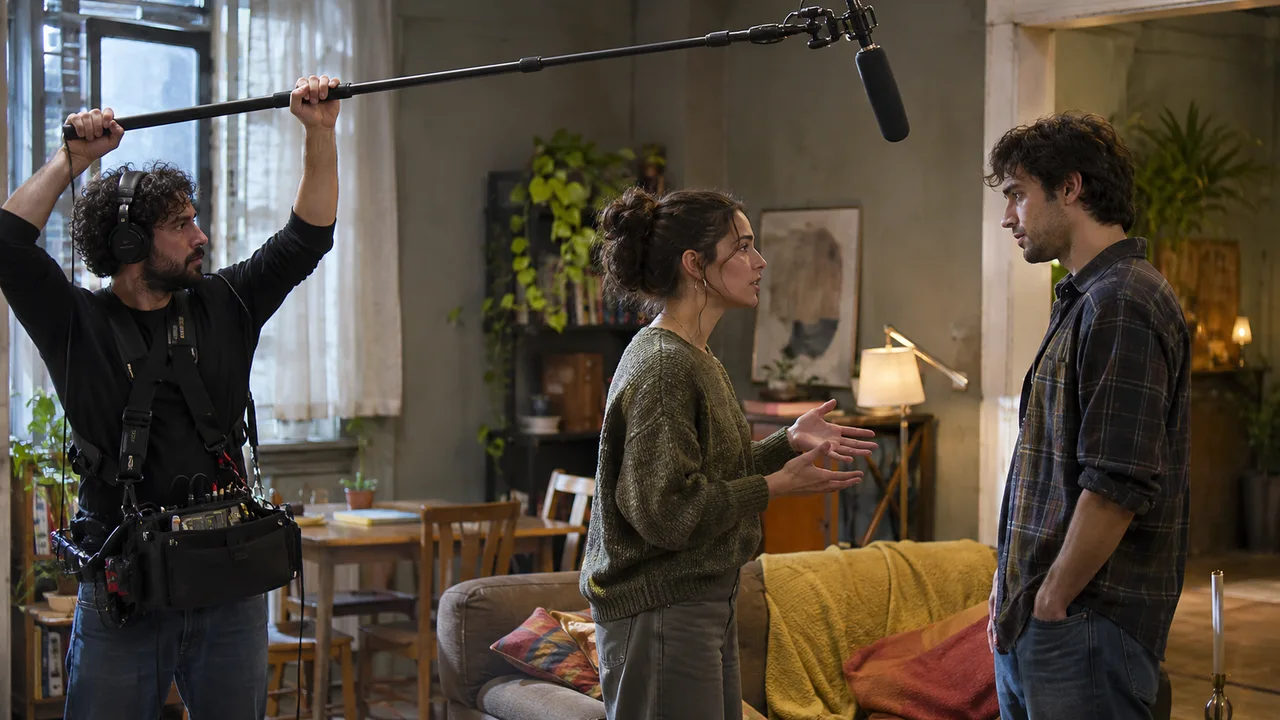
The city seen and heard
Compare crowds and sound in PlayTime, Do the Right Thing and Koyaanisqatsi. A street can host exchange, direct bodies or create rhythms. Choose a scene making each city recognisable without consulting a map.

Black and white: light and space
Compare monochrome comedy in Safety Last!, fear in The Night of the Hunter and questioning in The Seventh Seal. Absent colour does not impose one mood. Watch silhouettes separating from backgrounds and spaces appearing open or closed.
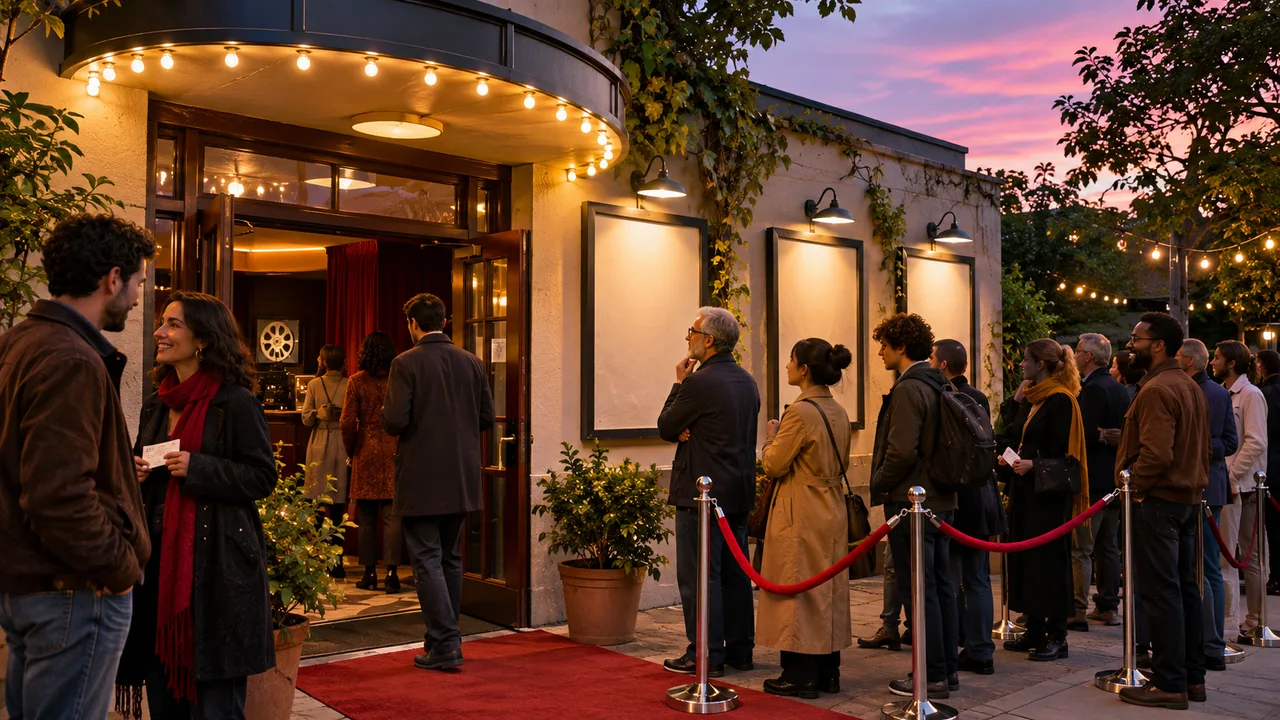
Leaving, staying, imagining elsewhere
Compare everyday movement and imagined journeys. Touki bouki, Bicycle Thieves and Pather Panchali connect space to desire or necessity through different forms.
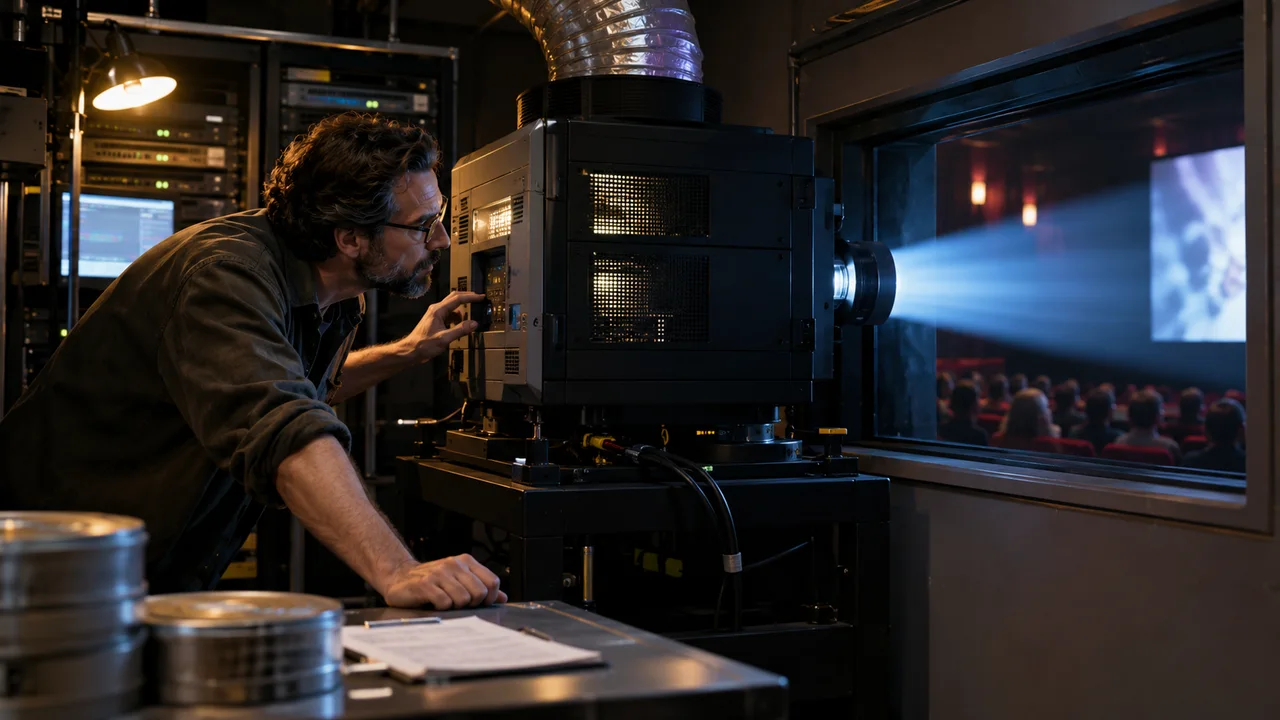
Clocks, waiting and duration
Three sessions on experienced time: waiting in Paris, routine in Tokyo and a confined discussion. Shot length and total runtime have different effects.

Listen beyond the frame
A sound can suggest a place, an arrival or a revised impression. A Man Escaped, Night of the Living Dead and The Piano offer different uses; unseen sound is not always threatening.

The time of everyday work
Jeanne Dielman, Perfect Days and Modern Times approach repetition differently. Compare task time, breaks and who can change the pace, without treating their views of work as identical.
Speaking, singing and changing scenes
Before Sunrise links conversation and walking; The Umbrellas of Cherbourg sings its exchanges; Singin’ in the Rain connects dialogue scenes and musical numbers. Compare speech and space, rather than ranking the films.
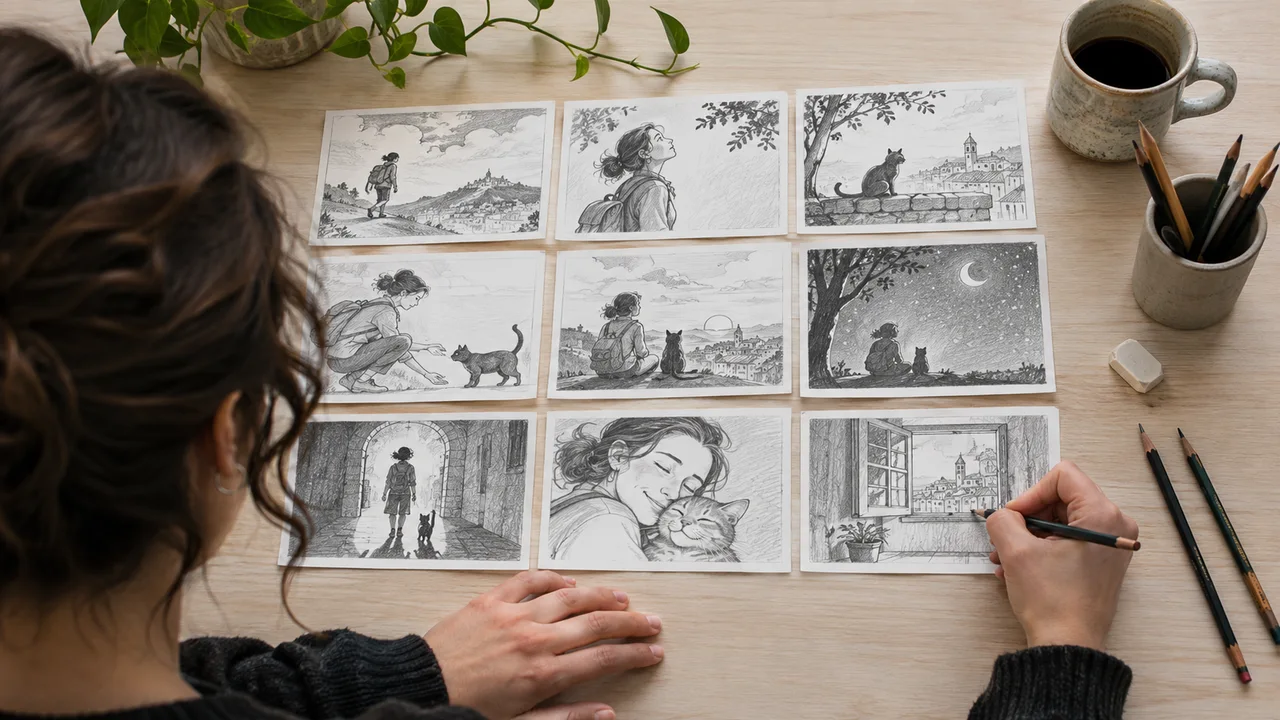
Faces and silent responses
The Passion of Joan of Arc, Persona and Portrait of a Lady on Fire explore responses beyond words. Compare face duration, watchers and surrounding space. A close-up offers proximity, not certain access to thought.

Childhood and discovery
Three perspectives on childhood: compare camera height, movement and received explanations.
Memory and framing
Stories conveying experience through voice or gaze. Observe the gap between the teller and the image.

Objects and relationships
An instrument, a bicycle and gag props: three ways of linking relationships to access to an object.

Rules and repetition
Two serial stories and an anthology to distinguish continuity between episodes from a fresh start.
Three Colors: three ways of relating
Returning music, an exchange changing meaning, a voice heard at a distance: connect the films through a precise situation as well as their colours.
Reading film posters
See how format and release market shape the layout. Grand Hotel uses a tall poster, Duck Soup spreads its design horizontally, and the narrow To Have and Have Not insert stacks its elements. Roland Coudon’s Tarzan bears a French title. Each film entry identifies the surviving poster and its source.
World cinema
Japan
From Seven Samurai’s group to Tokyo Story’s family and Miyazaki’s animated worlds: discover Japanese filmmakers through distinct forms rather than a single national style.
France
Paris, viewpoints and movement: Truffaut, Varda and Tati offer complementary starting points. Reference country alone does not establish setting or language.
Italy
Bicycle Thieves explores everyday life and the city; The Battle of Algiers, listed under Italy and Algeria, asks different questions about re-enactment and historical viewpoints.

India
Pather Panchali opens a path through childhood, listening and family life. This Bengali starting point alone does not represent Indian cinema’s diversity of languages and forms.
Senegal
Touki bouki offers discovery through movement, departure and sonic breaks. This dossier follows one work and filmmaker rather than claiming to summarise Senegalese cinema.

Iran
With Close-up, start with filmmaker, participants and viewer. The boundary between real account and staging becomes a question to observe rather than a label to guess.

United States
This selection gathers works whose catalogue sources list the United States, spanning comedy, documentary, animation and drama. It is not a complete account of American cinema. Reference country and story setting differ: Before Sunrise takes place in Vienna while Criterion lists the United States.
United Kingdom
Catalogue references connect 2001: A Space Odyssey and The Red Shoes to the United Kingdom. The former also lists the United States; co-productions can appear in several selections. Two works do not summarise a national tradition, but offer a contrast between space journey and dance performance.
Sweden
Persona, Wild Strawberries and The Seventh Seal are the documented Swedish works here. All are directed by Ingmar Bergman; the path compares forms within one body of work, not all Swedish cinema.
Germany
Criterion lists Germany for Wings of Desire and Perfect Days, and Japan too for Perfect Days. Their settings are Berlin and Tokyo. Reference country, filmed place and language must remain separate.
Glossary
- SVOD
- Subscription access to a catalogue; titles and options vary by territory and plan.
- TVOD
- Per-title rental or digital purchase, separate from subscription.
- AVOD
- Ad-funded viewing; access terms and catalogue depend on the service.
- FAST
- Ad-funded linear streaming channels. Programming follows a schedule rather than on-demand choice.
- HDR
- High dynamic range. Separate from resolution: 4K content is not necessarily HDR.
- 4K UHD
- Common consumer resolution of 3840 × 2160 pixels. Quality also depends on compression and source.
- VO
- Original version: preserves the original performance language. Subtitles are a separate option.
- SDH / CC
- Captions including sound information and sometimes speaker identification. Conventions vary by service and language. During a trial, choose a passage with several speakers and an off-screen sound. Check what the captions actually convey beyond their presence in the menu.
- AD
- Audio description: narration of useful visual elements between dialogue; check language and title support. Check the track on the actual edition and device. A feature named in general service help does not confirm support for every work; listen to the opening and identify the selected language.
- Aspect ratio
- Ratio of image width to height. Black bars may preserve it on a differently shaped screen.
- Intertitle
- Text inserted between images, notably to convey a line or information in silent films.
- Off-screen space
- What lies beyond the visible frame but may be suggested by a look, sound or story.
- Sequence shot
- A continuous shot developing a sequence without a visible edit; duration alone does not explain its effect.
- Diegetic sound
- Sound belonging to the story world, such as conversation or a radio heard within the scene.
- Shot
- A shot is a unit between cuts in the presented edit. Describe length, distance and movement before interpreting its effect.
- Cut continuity
- A relationship between shots: direction, gaze, gesture or sound may create continuity or a visible break.
- Ellipsis
- An omitted interval in the story. Look for the cue that establishes time passing without showing it.
- Shot/reverse shot
- Alternating viewpoints often used in dialogue. Watch reactions and what remains offscreen too.
- Non-diegetic sound
- Sound outside the represented world, such as music characters cannot hear. Its status may change within a scene.
- Master
- Reference element or file used to produce an edition. Editions with the same title can use different masters.
- Co-production
- Production involving partners from several countries. Listed countries depend on source scope and do not necessarily describe filming locations.
- Re-enactment
- A scene re-enacted after an event. It may illuminate an account but is not direct footage of the original event.
- Letterboxing
- Bars above and below a picture wider than its screen, preserving its proportions and edges. They may also already be embedded in the video file.
- Pillarboxing
- Bars beside a picture narrower than its screen. A 4:3 picture fitted without cropping on a 16:9 screen therefore leaves side bars.
- Pan-and-scan
- A process that crops a wide picture to fill a narrower frame; the selected area may move between or within shots. Parts of the original picture disappear even when object proportions are preserved.
- Projection frame rate
- Number of frames shown per second, distinct from picture shape. With an unchanged frame count, moving from 24 to 25 frames per second reduces runtime to 24/25 of its original value. A conversion can also preserve runtime, so this calculation does not prove that an edition runs faster.