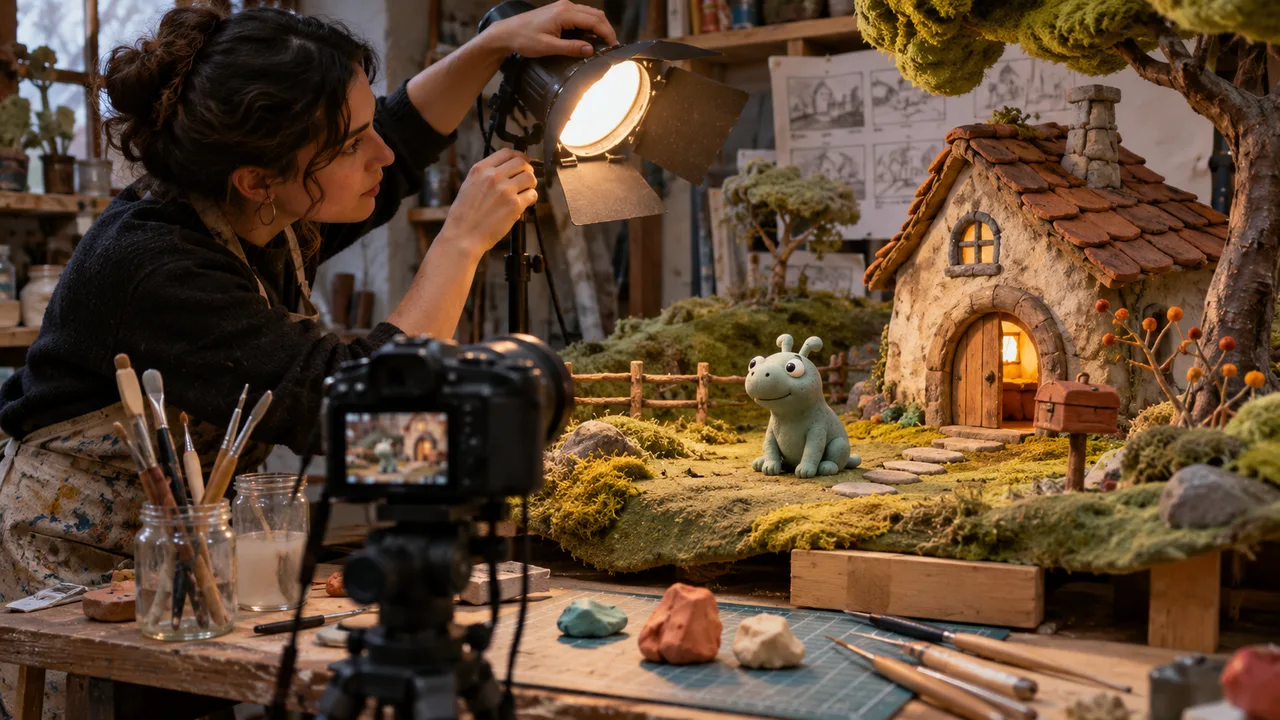
To watch animation closely, observe how material, drawing or volume changes between images. Compare movement, texture and rhythm without reducing techniques to a contrast between realism and simplicity.
Stop-motion moves objects or puppets between photographed frames. Drawn animation creates poses as drawings. Techniques may mix; visible results do not always reveal the complete production process.
02 Compare materials
In Fantastic Mr. Fox, notice texture, motion and set scale. Compare with My Neighbor Totoro: how do everyday gestures, rain or silence bring a character to life? Concrete comparison is more useful than ranking techniques.
03 Take action
Explore production documents after first viewing. Fantastic Mr. Fox supplements cover puppet construction and stop-motion setups. For children, choose by themes and local rating before technique.
Frequently asked questions
Can I identify technique by sight?
Materials and movement offer clues, but digital work may imitate them and techniques may coexist. Check production notes.
A technique describes how images are made, not their audience or artistic quality. A film can combine processes. Check credits or production notes to identify them; appearance alone can mislead.
Three pointers for your next screening
Pointer
Observe
Explore further
Drawn animation
Drawn images, on paper or with digital tools.
Watch how a silhouette changes during a gesture and settles at rest.
Stop motion
Objects or puppets moved between individual photographed frames.
Look at contact with the set: a foot, hand or shadow. How does movement give material weight?
Computer animation
Images computed from digital models and parameters; rendering can imitate drawings or physical materials.
Compare a character accelerating and stopping. Smooth and stepped movement can both be expressive choices.
Repeat with a quiet scene: animation also emerges in hesitation, breathing or a look, beyond spectacular action.
Stop motion photographs subjects moved between shots. For a test, keep phone, set and lighting fixed; move one object across the frame in small steps, photographing each position. Then observe how spacing changes continuity and perceived speed.
The BFI also suggests separate work on voices and effects. Begin with a short action before adding characters or camera movement. A handmade appearance does not prove a film’s technique: drawings, photographed objects and digital elements can combine. Check making-of materials and credits before inferring methods or software.
Try the reasoning
A film combines techniques. How should you describe it?
Separate methods by sequence using production records, rather than reducing the film to one shot.