
Practical guides
Simple decisions for better viewing: access, picture, languages and planning.
Find access and manage costs
Compare models, check a title and organise payments.
 AI-generated illustration01
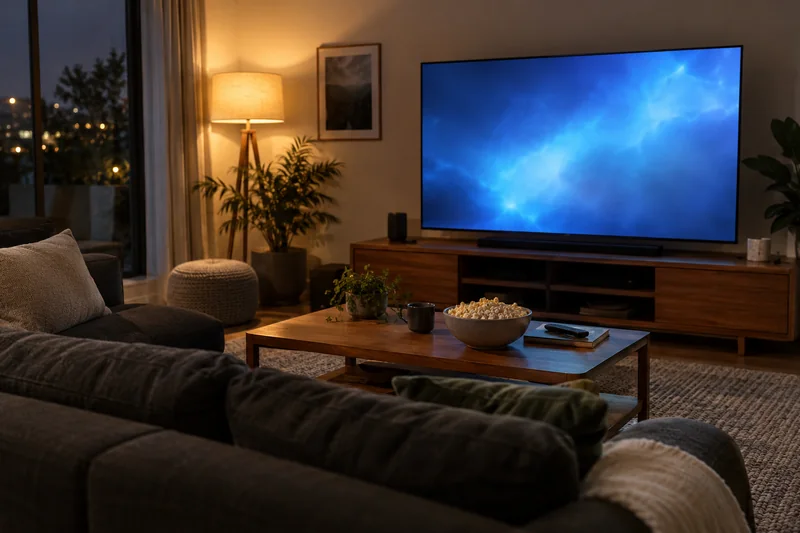
Choose a streaming subscription
Start with three titles you actually want to watch, your viewing country and your devices. Find each title in the local catalogue before paying. A familiar brand guarantees…
Read guide ↗ AI-generated illustration02
Find where to watch a film legally
Search the original title, year and director: remakes and translated titles can cause confusion. Set your country in an availability finder, then open the service’s own page.…
Read guide ↗AI-generated illustration03Rental, purchase or subscription: which to choose?
For one title, compare rental with the subscription month actually needed. A service not including the film is not an alternative merely because its app lists it. For several…
Read guide ↗AI-generated illustration04Manage renewals and cancellations
Identify the biller: service, app store or operator. Find the receipt and associated account. An option missing on the service website may be managed by the partner collecting…
Read guide ↗AI-generated illustration05Free streaming: compare access models
Distinguish ad-funded free services, broadcaster catch-up and paid-subscription trials. Trials may renew with a charge; read terms before joining. ARTE, france.tv and Pluto TV…
Read guide ↗ AI-generated illustration06
Live TV, catch-up and FAST channels
Live TV follows a schedule; catch-up offers selected programmes after broadcast. FAST channels combine linear streaming schedules with advertising. Free access, no account and no…
Read guide ↗Prepare comfortable viewing
Check devices, network, tracks and accessibility before viewing.
AI-generated illustration07Understand 4K, HDR and picture quality
Resolution describes pixel count; HDR concerns brightness range and colour. A 4K TV alone is insufficient: title, plan, app and connection chain must be compatible. A badge may…
Read guide ↗ AI-generated illustration08
Original audio, dubbing, subtitles and audio description
Interface language does not determine all available tracks. Open audio and subtitle options on the exact title and device. Languages may differ by service, territory and edition.
Read guide ↗AI-generated illustration09Prepare offline viewing
Downloads depend on plan, title and app. Check your device: browser and mobile app may offer different features. A download is temporary access, not a freely transferable file…
Read guide ↗AI-generated illustration10Audio description and accessible subtitles
Audio description explains visual information between dialogue. Deaf and hard-of-hearing captions may identify speakers and relevant sounds as well as words. Standard translated…
Read guide ↗AI-generated illustration11Buffering streams: a practical diagnosis
Record the exact message, device, app and title. Try another programme on the same device: if only one fails, check its entry or access rights before a full reset. Look up the…
Read guide ↗AI-generated illustration12Prepare a home film screening
Check title, edition, stated duration and tracks before viewers arrive. Test with the actual device and connection. Playback on a phone does not guarantee the same experience on a…
Read guide ↗AI-generated illustration13Picture formats: preserve the frame
Aspect ratio describes width/height, not resolution. A 1.33:1 frame is nearer a square than 1.85:1. Our ratios describe cited editions; check the reference when versions differ.…
Read guide ↗ AI-generated illustration14
Listen to a film: voices, music and effects
Note one sound a character hears and another primarily addressed to the viewer. Music may come from a radio within a scene or accompany images without a visible source. You need…
Read guide ↗Discover and understand works
Choose for your viewers, then explore story, technique and editions.
AI-generated illustration15Choose a family film
Check local rating and content information, then consider each child’s sensitivity. Animation, age or animals do not guarantee suitability. Ask what everyone wants and do not…
Read guide ↗ AI-generated illustration16
Analyse a film without losing enjoyment
On first viewing, follow the story. Afterwards note three memorable moments and describe what you actually saw or heard. Separate observations, interpretations and production…
Read guide ↗AI-generated illustration17Start a series and avoid spoilers
Distinguish serialised stories, standalone episodes and anthology. For continuous stories, start at episode one and check season order. An anthology may change characters without…
Read guide ↗AI-generated illustration18Watch a documentary critically
Identify the approach: investigation, portrait, archive, observation or visual essay. Documentary is not automatically a full record. Notice who speaks, who is absent and how…
Read guide ↗ AI-generated illustration19
Cuts, restorations and editions: choose a version
Separate film year from edition year. A recent restoration does not turn an old film into a new work. Note publisher, cut and languages; compare runtime with the same version…
Read guide ↗AI-generated illustration20Drawn animation and stop-motion: seeing materials
Stop-motion moves objects or puppets between photographed frames. Drawn animation creates poses as drawings. Techniques may mix; visible results do not always reveal the complete…
Read guide ↗ AI-generated illustration21
Discover silent cinema
Start with a short comedy whose movement is easy to follow: Safety Last! is one entry in our selection. Watch hands, looks and object positions before reading intertitles. The…
Read guide ↗AI-generated illustration22Watch a black-and-white film
Choose a simple question: how does light direct attention? Follow faces in Persona, silhouettes in The Night of the Hunter, and bodies sharing a room in 12 Angry Men. These are…
Read guide ↗AI-generated illustration23Choose a film for your available time
Count the time until your evening ends, allowing setup and discussion. Search’s under-100-minute filter uses documented entry runtimes and does not assign a total to series. Short…
Read guide ↗AI-generated illustration24Discuss a film after viewing
Start without scoring: each person chooses an image, sound or reaction. Check everyone finished before discussing the ending. For beginners a concrete question works better than…
Read guide ↗AI-generated illustration25Understand editing without jargon
Choose a dialogue scene and count shots. Note who remains visible when the other speaks: a reaction can become the scene’s centre. Describe image order before attributing intent.…
Read guide ↗AI-generated illustration26Fiction, documentary and re-enactment
Before treating an image as documentation, ask when and how it was filmed. Real people may re-enact events; fiction may use real locations. Close-up explores this boundary. Record…
Read guide ↗AI-generated illustration27Explore world cinema
Start with a shared question rather than a national ranking. Compare childhood in Pather Panchali and The 400 Blows, movement in Touki bouki and Bicycle Thieves. These are viewing…
Read guide ↗