
Search
The film and television encyclopedia
Explore the encyclopedia
675 results
Works shown : 73–96 / 634.
Explore data for this selection
The selection in perspective
Works shown here by decade. This describes this catalogue, not world production or film popularity. Series use their first broadcast year.
- 1910–19191 works
- 1920–192910 works
- 1930–193911 works
- 1940–194913 works
- 1950–195932 works
- 1960–196934 works
- 1970–197928 works
- 1980–198965 works
- 1990–199984 works
- 2000–2009161 works
- 2010–2019145 works
- 2020–202950 works
- Shortest
- 59 minBlack Girl
- Median runtime
- 107 min474 documented films
- Longest
- 207 minSeven Samurai
Calculated from cited-edition runtimes, including approximate values; series and unknown runtimes excluded. The median divides films into two halves by runtime. Decade links open the full catalogue.
How much time for a film?
Each documented film is counted once in a range. Counts and bars describe only films in this selection with a known runtime.
- 100 min or less
169 / 474 169 - 101–139 min
261 / 474 261 - 140–179 min
40 / 474 40 - 180 min or more
4 / 474 4
Runtimes refer to cited editions and may be approximate. Allow separately for breaks and discussion. Links below open the full catalogue filtered by runtime.
Spider-Man 3
Sam Raimi
2007 American film directed by Sam Raimi
Indiana Jones and the Last Crusade
Steven Spielberg
1989 film directed by Steven Spielberg
Charlie and the Chocolate Factory
Tim Burton
2005 film directed by Tim Burton
Batman
Tim Burton
1989 film directed by Tim Burton
The Last Emperor
Bernardo Bertolucci
1987 film by Bernardo Bertolucci
Blood Diamond
Edward Zwick
2006 film by Edward Zwick
Once Upon a Time in the West
Sergio Leone
1968 film by Sergio Leone
The Deer Hunter
Michael Cimino
1978 film directed by Michael Cimino
Jurassic World
Colin Trevorrow
2015 film directed by Colin Trevorrow
Angels & Demons
Ron Howard
2009 film directed by Ron Howard
1950Sunset BoulevardPoster unavailable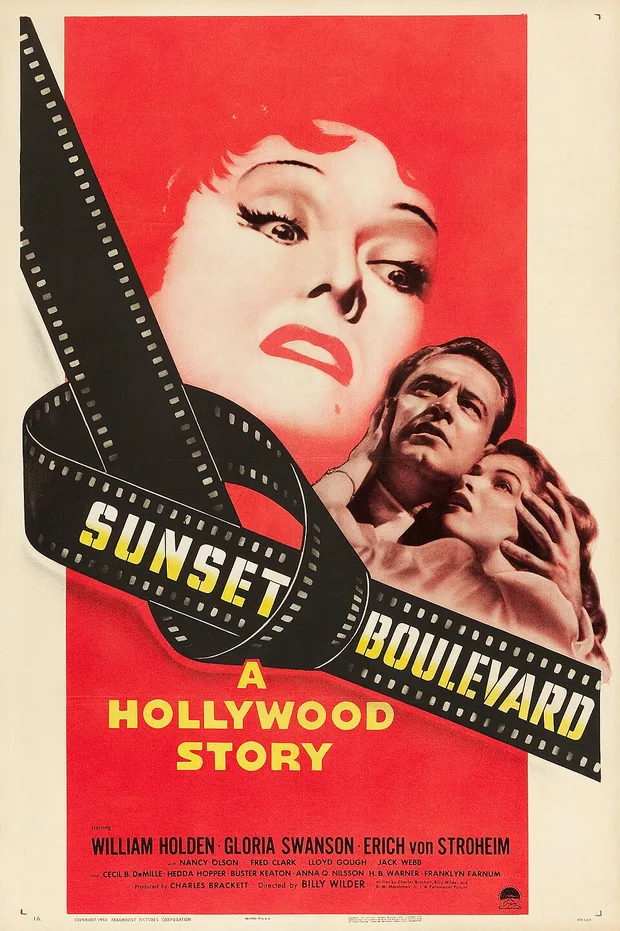
Sunset Boulevard
Billy Wilder
1950 film by Billy Wilder
Sherlock Holmes: A Game of Shadows
Guy Ritchie
2011 film directed by Guy Ritchie
Star Trek
J. J. Abrams
2009 film directed by J. J. Abrams
Sonic the Hedgehog
Jeff Fowler
2020 film directed by Jeff Fowler
Who Framed Roger Rabbit
Robert Zemeckis
1988 film directed by Robert Zemeckis
Doctor Strange in the Multiverse of Madness
Sam Raimi
2022 film directed by Sam Raimi
Nosferatu
F. W. Murnau
1922 film directed by F. W. Murnau
As Good as It Gets
James L. Brooks
1997 film directed by James L. Brooks
There Will Be Blood
Paul Thomas Anderson
2007 film by Paul Thomas Anderson
The Passion of the Christ
Mel Gibson
2004 film directed by Mel Gibson
The Help
Tate Taylor
2011 US film directed by Tate Taylor
Open Season
Jill Culton / Roger Allers / Anthony Stacchi
2006 computer-animated film by Roger Allers and Anthony Stacchi
Edward Scissorhands
Tim Burton
1990 film directed by Tim Burton
The Graduate
Mike Nichols
1967 film by Mike Nichols
Practical guides
 AI-generated illustration01
Choose a streaming subscription
Choose a subscription by starting with the films and series you want to watch, then check their inclusion in your local plan. Compare devices, advertising, audio tracks and total…
Read guide ↗ AI-generated illustration02
Understand 4K, HDR and picture quality
Resolution, HDR and compression quality describe different aspects of an image. Before changing your plan or display, check the source, title, playback settings and compatibility…
Read guide ↗ AI-generated illustration03
Original audio, dubbing, subtitles and audio description
Original audio, dubbing, subtitles and audio description are separate choices. Check the tracks for the exact title on your device, then test a dialogue scene before viewing.
Read guide ↗ AI-generated illustration04
Prepare offline viewing
Offline viewing requires an app that allows downloading your chosen title. Check device support, free storage and expiry, then test playback without a network before leaving.
Read guide ↗ AI-generated illustration05
Choose a family film
Choosing a family film means checking its content, local rating and each viewer’s sensitivities. Animation or an older release does not guarantee suitability for children;…
Read guide ↗ AI-generated illustration06
Analyse a film without losing enjoyment
To analyse a film, start with an observable detail: a position in the frame, a sound or a cut. Describe it before interpreting it, then compare it with another moment in the film.
Read guide ↗ AI-generated illustration07
Start a series and avoid spoilers
Before starting a series, identify its starting point and episode order, then check the seasons offered by your service. Avoid spoilers by reading practical information without…
Read guide ↗ AI-generated illustration08
Watch a documentary critically
A documentary presents a viewpoint through its sources, framing and editing. Separate what is filmed, what is claimed and what evidence supports it, rather than treating an…
Read guide ↗ AI-generated illustration09
Prepare a home film screening
To prepare a home screening, check the title, runtime, tracks and playback on your chosen device. Allow time for setup, breaks and discussion, then test sound and picture before…
Read guide ↗ AI-generated illustration10
Cuts, restorations and editions: choose a version
To choose an edition, compare cut, runtime, framing, language and restoration source. One title can cover several versions: higher resolution alone does not establish that they…
Read guide ↗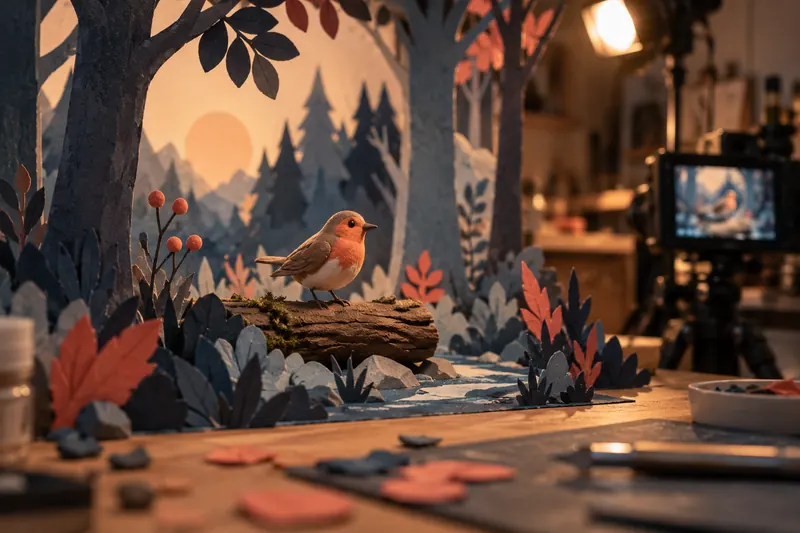 AI-generated illustration11
Drawn animation and stop-motion: seeing materials
To watch animation closely, observe how material, drawing or volume changes between images. Compare movement, texture and rhythm without reducing techniques to a contrast between…
Read guide ↗ AI-generated illustration12
Free streaming: compare access models
A free service may use advertising, scheduled channels or a catalogue limited by time and country. Before planning a screening, check the official site, access terms and the exact…
Read guide ↗ AI-generated illustration13
Discover silent cinema
Silent cinema also unfolds through gestures, intertitles and the musical accompaniment of your edition. Check the restoration, playback speed and score: two editions can create…
Read guide ↗ AI-generated illustration14
Watch a black-and-white film
Watching black-and-white cinema means following contrast, textures and the separation of planes through light. Describe a bright area and a dark area before assigning symbolic…
Read guide ↗ AI-generated illustration15
Picture formats: preserve the frame
To preserve a film’s framing, respect its aspect ratio and avoid zoom settings that crop the edges. Black bars can be normal: compare the edition’s ratio with your screen’s ratio.
Read guide ↗ AI-generated illustration16
Listen to a film: voices, music and effects
To listen closely to a film, separate voices, ambience, effects and music, then notice their entrances and silences. Ask what a sound suggests beyond the frame and who can hear it…
Read guide ↗ AI-generated illustration17
Choose a film for your available time
To choose a film for your available time, subtract breaks and discussion first, then compare the edition’s runtime. Approximate runtimes need a margin; check series timing per…
Read guide ↗ AI-generated illustration18
Discuss a film after viewing
A film discussion benefits from starting with a specific scene rather than an overall verdict. Separate observed detail, personal response and interpretation, then listen to other…
Read guide ↗ AI-generated illustration19
Understand editing without jargon
To understand editing, observe what changes between two shots: place, time, movement, gaze or sound. Describe the transition and the information it adds or withholds before…
Read guide ↗ AI-generated illustration20
Fiction, documentary and re-enactment
Fiction, documentary and reconstruction differ in their relationship to events and how they present sources. Identify who films, who narrates and what is reenacted; a realistic…
Read guide ↗ AI-generated illustration21
Explore world cinema
To explore world cinema, start with a work and its production references, then compare specific forms and contexts. Production country, language and story setting are different…
Read guide ↗Platforms

Cinema paths

Fear in confined spaces
Besieged houses, disturbing objects, labyrinthine offices: compare restrictions on movement and information. Check content advice for the images and themes in this path.
Serial, limited series or anthology?
Choose a form to suit your pace. A continuous story builds relationships over time; a limited series offers a bounded whole; an anthology renews its stories. Episode length alone does not predict the experience.
Testimony, doubt and truth
Three ways to form conviction: conflicting accounts, collective discussion and documentary investigation. Start with Rashomon, continue with 12 Angry Men, then compare The Thin Blue Line. Who produces each image, who comments on it, and what remains unverified?
Everyday gestures and routines
A gesture can express constraint, habit or choice. Compare mechanical work in Modern Times, the day in Perfect Days and circulation in PlayTime. Instead of imposing one moral, notice what repetition changes in your perception of character and place.
Families, generations and distance
Tokyo Story’s visit, memories in Wild Strawberries and a child’s perspective in Bicycle Thieves compare family as relationship rather than backdrop. Notice who has time, who cares for others and who remains outside conversation.
The city seen and heard
Compare crowds and sound in PlayTime, Do the Right Thing and Koyaanisqatsi. A street can host exchange, direct bodies or create rhythms. Choose a scene making each city recognisable without consulting a map.
Black and white: light and space
Compare monochrome comedy in Safety Last!, fear in The Night of the Hunter and questioning in The Seventh Seal. Absent colour does not impose one mood. Watch silhouettes separating from backgrounds and spaces appearing open or closed.
Clocks, waiting and duration
Three sessions on experienced time: waiting in Paris, routine in Tokyo and a confined discussion. Shot length and total runtime have different effects.
The time of everyday work
Jeanne Dielman, Perfect Days and Modern Times approach repetition differently. Compare task time, breaks and who can change the pace, without treating their views of work as identical.
Faces and silent responses
The Passion of Joan of Arc, Persona and Portrait of a Lady on Fire explore responses beyond words. Compare face duration, watchers and surrounding space. A close-up offers proximity, not certain access to thought.
World cinema
Japan
From Seven Samurai’s group to Tokyo Story’s family and Miyazaki’s animated worlds: discover Japanese filmmakers through distinct forms rather than a single national style.

India
Pather Panchali opens a path through childhood, listening and family life. This Bengali starting point alone does not represent Indian cinema’s diversity of languages and forms.
Iran
With Close-up, start with filmmaker, participants and viewer. The boundary between real account and staging becomes a question to observe rather than a label to guess.

United States
This selection gathers works whose catalogue sources list the United States, spanning comedy, documentary, animation and drama. It is not a complete account of American cinema. Reference country and story setting differ: Before Sunrise takes place in Vienna while Criterion lists the United States.
United Kingdom
Catalogue references connect 2001: A Space Odyssey and The Red Shoes to the United Kingdom. The former also lists the United States; co-productions can appear in several selections. Two works do not summarise a national tradition, but offer a contrast between space journey and dance performance.
Sweden
Persona, Wild Strawberries and The Seventh Seal are the documented Swedish works here. All are directed by Ingmar Bergman; the path compares forms within one body of work, not all Swedish cinema.
Glossary
- SDH / CC
- Captions including sound information and sometimes speaker identification. Conventions vary by service and language. During a trial, choose a passage with several speakers and an off-screen sound. Check what the captions actually convey beyond their presence in the menu.
- Ellipsis
- An omitted interval in the story. Look for the cue that establishes time passing without showing it.
- Projection frame rate
- Number of frames shown per second, distinct from picture shape. With an unchanged frame count, moving from 24 to 25 frames per second reduces runtime to 24/25 of its original value. A conversion can also preserve runtime, so this calculation does not prove that an edition runs faster.