
Search
The film and television encyclopedia
Explore the encyclopedia
14639 results
Works shown : 2113–2136 / 14606.
Explore data for this selection
The selection in perspective
Works shown here by decade. This describes this catalogue, not world production or film popularity. Series use their first broadcast year.
- 1910–191913 works
- 1920–192962 works
- 1930–193987 works
- 1940–1949114 works
- 1950–1959164 works
- 1960–1969180 works
- 1970–1979563 works
- 1980–19891748 works
- 1990–19992053 works
- 2000–20093166 works
- 2010–20193756 works
- 2020–20292700 works
- Shortest
- 1 minThe Clue
- Median runtime
- 96 min10811 documented films
- Longest
- 5120 minGhosts of Rwanda
Calculated from cited-edition runtimes, including approximate values; series and unknown runtimes excluded. The median divides films into two halves by runtime. Decade links open the full catalogue.
How much time for a film?
Each documented film is counted once in a range. Counts and bars describe only films in this selection with a known runtime.
- 100 min or less
6590 / 10811 6590 - 101–139 min
3766 / 10811 3766 - 140–179 min
369 / 10811 369 - 180 min or more
86 / 10811 86
Runtimes refer to cited editions and may be approximate. Allow separately for breaks and discussion. Links below open the full catalogue filtered by runtime.
La Reine Margot
Patrice Chéreau
1994 film by Patrice Chéreau
House of Sand and Fog
Vadim Perelman
2003 film by Vadim Perelman
Smokey and the Bandit
Hal Needham
1977 film by Hal Needham
Fail-Safe
Sidney Lumet
1964 film directed by Sidney Lumet
Play Misty for Me
Clint Eastwood
1971 film directed by Clint Eastwood
Spy Kids 2: The Island of Lost Dreams
Robert Rodriguez
2002 film by Robert Rodriguez
Yesterday
Danny Boyle
2019 film directed by Danny Boyle
Uncle Boonmee Who Can Recall His Past Lives
Apichatpong Weerasethakul
2010 film directed by Apichatpong Weerasethakul
Red Dawn
Dan Bradley
2012 war film directed by Dan Bradley
Murder Mystery
Kyle Newacheck
2019 film directed by Kyle Newacheck
The Dead Don't Die
Jim Jarmusch
2019 film directed by Jim Jarmusch
Judy
Rupert Goold
2019 film directed by Rupert Goold
Bloodshot
David S. F. Wilson
2020 film directed by Dave Wilson
Dora and the Lost City of Gold
James Bobin
2019 film directed by James Bobin
Los Olvidados
Luis Buñuel
1950 film by Luis Buñuel
Sanjuro
Akira Kurosawa
1962 film by Akira Kurosawa
The Madness of King George
Nicholas Hytner
1994 historical film directed by Nicholas Hytner
Ready or Not
Matt Bettinelli-Olpin / Tyler Gillett
2019 film by Matt Bettinelli-Olpin and Tyler Gillett
A Royal Affair
Nikolaj Arcel
2012 film by Nikolaj Arcel
Mr. Deeds
Steven Brill
2002 film by Steven Brill
Prince of Darkness
John Carpenter
1987 film by John Carpenter
Harold & Kumar Go to White Castle
Danny Leiner
2004 film by Danny Leiner
We're No Angels
Neil Jordan
1989 film by Neil Jordan
The Walls of Malapaga
René Clément
1949 film by René Clément
Practical guides
 01
Choose a streaming subscription
Choose a subscription by starting with the films and series you want to watch, then check their inclusion in your local plan. Compare devices, advertising, audio tracks and total…
Read guide ↗ 02
Find where to watch a film legally
To find where to watch a film legally, identify its title, year and version first. Then check the official service in your country for included access, rental or purchase: a…
Read guide ↗ 03
Understand 4K, HDR and picture quality
Resolution, HDR and compression quality describe different aspects of an image. Before changing your plan or display, check the source, title, playback settings and compatibility…
Read guide ↗ 04
Original audio, dubbing, subtitles and audio description
Original audio, dubbing, subtitles and audio description are separate choices. Check the tracks for the exact title on your device, then test a dialogue scene before viewing.
Read guide ↗ 05
Choose a family film
Choosing a family film means checking its content, local rating and each viewer’s sensitivities. Animation or an older release does not guarantee suitability for children;…
Read guide ↗ 06
Start a series and avoid spoilers
Before starting a series, identify its starting point and episode order, then check the seasons offered by your service. Avoid spoilers by reading practical information without…
Read guide ↗ 07
Watch a documentary critically
A documentary presents a viewpoint through its sources, framing and editing. Separate what is filmed, what is claimed and what evidence supports it, rather than treating an…
Read guide ↗ 08
Live TV, catch-up and FAST channels
Live TV follows a schedule, while catch-up lets you choose a programme after broadcast within its access window. FAST channels are linear and ad-funded; check any on-demand…
Read guide ↗ 09
Buffering streams: a practical diagnosis
If streaming stalls, note the error code and check whether it affects one title, one device or the whole connection. Test one variable at a time before reinstalling an app, then…
Read guide ↗ 10
Audio description and accessible subtitles
Audio description describes story-relevant visual details; accessible captions can identify voices and sounds. Check these options for the exact title, language and device, then…
Read guide ↗ 11
Cuts, restorations and editions: choose a version
To choose an edition, compare cut, runtime, framing, language and restoration source. One title can cover several versions: higher resolution alone does not establish that they…
Read guide ↗ 12
Drawn animation and stop-motion: seeing materials
To watch animation closely, observe how material, drawing or volume changes between images. Compare movement, texture and rhythm without reducing techniques to a contrast between…
Read guide ↗ 13
Free streaming: compare access models
A free service may use advertising, scheduled channels or a catalogue limited by time and country. Before planning a screening, check the official site, access terms and the exact…
Read guide ↗ 14
Watch a black-and-white film
Watching black-and-white cinema means following contrast, textures and the separation of planes through light. Describe a bright area and a dark area before assigning symbolic…
Read guide ↗ 15
Picture formats: preserve the frame
To preserve a film’s framing, respect its aspect ratio and avoid zoom settings that crop the edges. Black bars can be normal: compare the edition’s ratio with your screen’s ratio.
Read guide ↗ 16
Discuss a film after viewing
A film discussion benefits from starting with a specific scene rather than an overall verdict. Separate observed detail, personal response and interpretation, then listen to other…
Read guide ↗ 17
Fiction, documentary and re-enactment
Fiction, documentary and reconstruction differ in their relationship to events and how they present sources. Identify who films, who narrates and what is reenacted; a realistic…
Read guide ↗ 18
Explore world cinema
To explore world cinema, start with a work and its production references, then compare specific forms and contexts. Production country, language and story setting are different…
Read guide ↗Platforms

Netflix
Films, series and original productions.

Disney+
Disney worlds, animation and franchises.

ARTE
Films, documentaries and cultural programmes; territorial rights apply.
Cinema paths
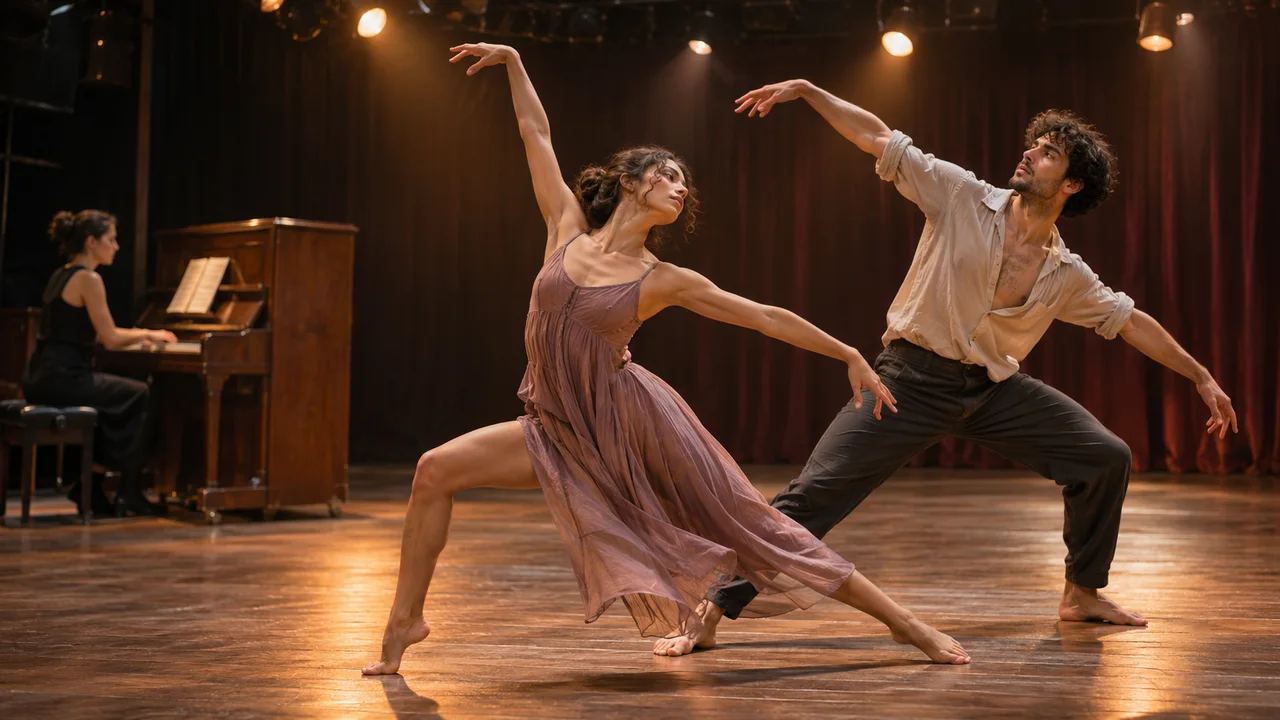
Bodies, work and dance
From factory gestures to musical numbers, movement can tell a story without explanation. Compare physical comedy, musicals and filmed ballet while keeping their different tones in view.
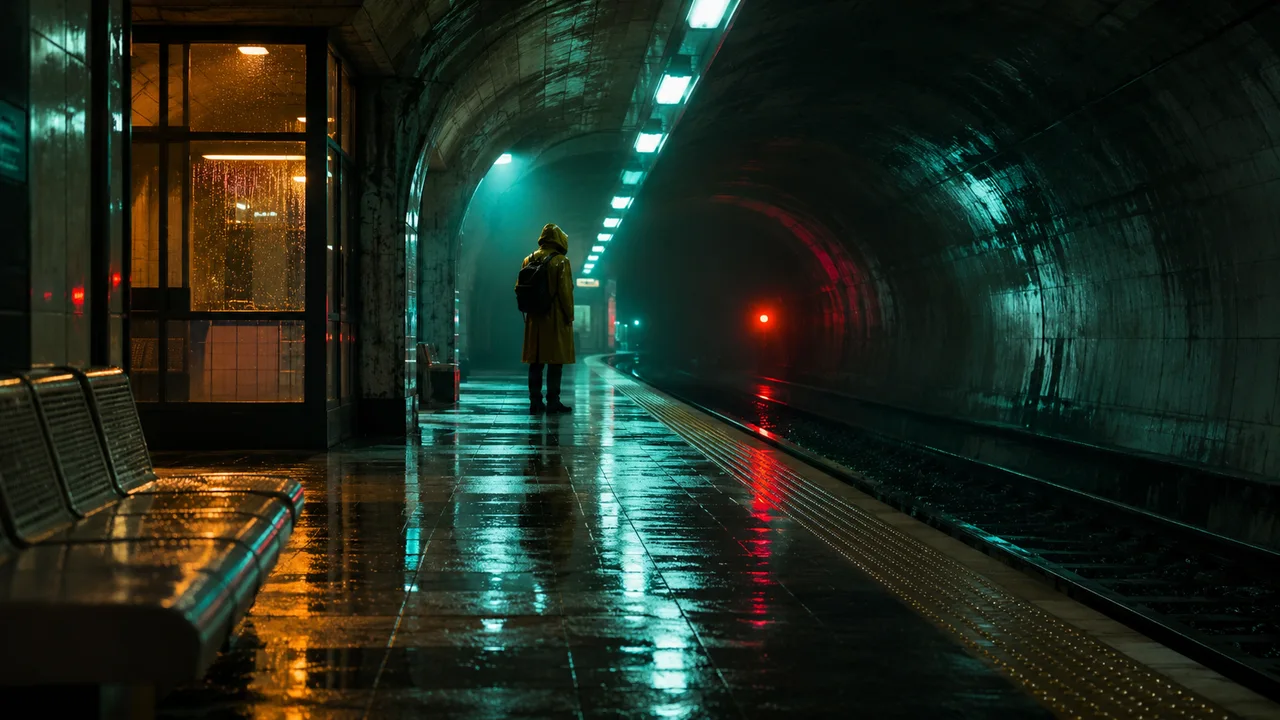
Everyday gestures and routines
A gesture can express constraint, habit or choice. Compare mechanical work in Modern Times, the day in Perfect Days and circulation in PlayTime. Instead of imposing one moral, notice what repetition changes in your perception of character and place.
Leaving, staying, imagining elsewhere
Compare everyday movement and imagined journeys. Touki bouki, Bicycle Thieves and Pather Panchali connect space to desire or necessity through different forms.

The time of everyday work
Jeanne Dielman, Perfect Days and Modern Times approach repetition differently. Compare task time, breaks and who can change the pace, without treating their views of work as identical.
World cinema

Japan
From Seven Samurai’s group to Tokyo Story’s family and Miyazaki’s animated worlds: discover Japanese filmmakers through distinct forms rather than a single national style.
France
Paris, viewpoints and movement: Truffaut, Varda and Tati offer complementary starting points. Reference country alone does not establish setting or language.
Italy
Bicycle Thieves explores everyday life and the city; The Battle of Algiers, listed under Italy and Algeria, asks different questions about re-enactment and historical viewpoints.

Senegal
Touki bouki offers discovery through movement, departure and sonic breaks. This dossier follows one work and filmmaker rather than claiming to summarise Senegalese cinema.
Iran
With Close-up, start with filmmaker, participants and viewer. The boundary between real account and staging becomes a question to observe rather than a label to guess.
United Kingdom
Catalogue references connect 2001: A Space Odyssey and The Red Shoes to the United Kingdom. The former also lists the United States; co-productions can appear in several selections. Two works do not summarise a national tradition, but offer a contrast between space journey and dance performance.
Germany
Criterion lists Germany for Wings of Desire and Perfect Days, and Japan too for Perfect Days. Their settings are Berlin and Tokyo. Reference country, filmed place and language must remain separate.