
Search
The film and television encyclopedia
Explore the encyclopedia
14639 results
Works shown : 1369–1392 / 14606.
Explore data for this selection
The selection in perspective
Works shown here by decade. This describes this catalogue, not world production or film popularity. Series use their first broadcast year.
- 1910–191913 works
- 1920–192962 works
- 1930–193987 works
- 1940–1949114 works
- 1950–1959164 works
- 1960–1969180 works
- 1970–1979563 works
- 1980–19891748 works
- 1990–19992053 works
- 2000–20093166 works
- 2010–20193756 works
- 2020–20292700 works
- Shortest
- 1 minThe Clue
- Median runtime
- 96 min10811 documented films
- Longest
- 5120 minGhosts of Rwanda
Calculated from cited-edition runtimes, including approximate values; series and unknown runtimes excluded. The median divides films into two halves by runtime. Decade links open the full catalogue.
How much time for a film?
Each documented film is counted once in a range. Counts and bars describe only films in this selection with a known runtime.
- 100 min or less
6590 / 10811 6590 - 101–139 min
3766 / 10811 3766 - 140–179 min
369 / 10811 369 - 180 min or more
86 / 10811 86
Runtimes refer to cited editions and may be approximate. Allow separately for breaks and discussion. Links below open the full catalogue filtered by runtime.
War and Peace
King Vidor
1956 film directed by King Vidor
Solaris
Steven Soderbergh
2002 film by Steven Soderbergh
Farewell My Concubine
Chen Kaige
1993 film directed by Chen Kaige
The Decameron
Pier Paolo Pasolini
1971 film by Pier Paolo Pasolini
1958Ashes and DiamondsPoster unavailable
Ashes and Diamonds
Andrzej Wajda
1958 film by Andrzej Wajda
Pleasantville
Gary Ross
1998 film directed by Gary Ross
My Blueberry Nights
Wong Kar-wai
2007 film by Wong Kar-wai
Atlantic City
Louis Malle
1980 film directed by Louis Malle
The Jewel of the Nile
Lewis Teague
1985 adventure comedy film by Lewis Teague
Basic Instinct 2
Michael Caton-Jones
2006 film directed by Michael Caton-Jones
Beginners
Mike Mills
2010 film directed by Mike Mills
1959Pillow TalkPoster unavailable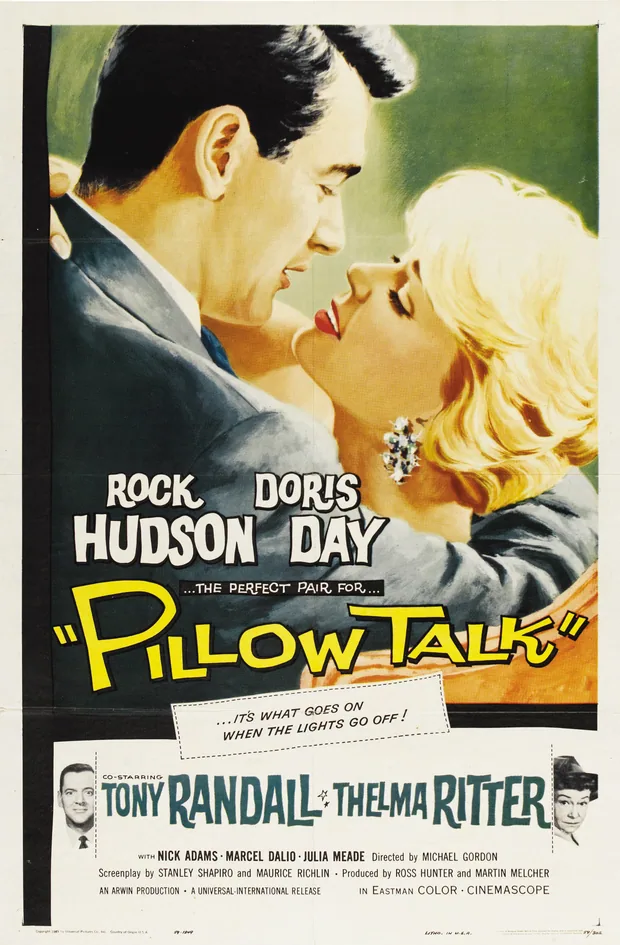
Pillow Talk
Michael Gordon
1959 film by Michael Gordon
Hard Candy
David Slade
2005 film directed by David Slade
Defiance
Edward Zwick
2008 film directed by Edward Zwick
Little Women
Gillian Armstrong
1994 film by Gillian Armstrong
Sky High
Mike Mitchell
2005 film directed by Mike Mitchell
50/50
Jonathan Levine
2011 film directed by Jonathan Levine
Big Trouble in Little China
John Carpenter
1986 film directed by John Carpenter
A Hard Day's Night
Richard Lester
1964 film and pilot by Richard Lester
Men of Honor
George Tillman, Jr.
2000 film directed by George Tillman Jr.
The Legend of Zorro
Martin Campbell
2005 film directed by Martin Campbell
Halloween 4: The Return of Michael Myers
Dwight H. Little
1988 film directed by Dwight H. Little
Gorillas in the Mist
Michael Apted
1988 film directed by Michael Apted
Chak De! India
Shimit Amin
2007 film directed by Shimit Amin
Practical guides
 01
Choose a streaming subscription
Choose a subscription by starting with the films and series you want to watch, then check their inclusion in your local plan. Compare devices, advertising, audio tracks and total…
Read guide ↗ 02
Find where to watch a film legally
To find where to watch a film legally, identify its title, year and version first. Then check the official service in your country for included access, rental or purchase: a…
Read guide ↗ 03
Understand 4K, HDR and picture quality
Resolution, HDR and compression quality describe different aspects of an image. Before changing your plan or display, check the source, title, playback settings and compatibility…
Read guide ↗ 04
Original audio, dubbing, subtitles and audio description
Original audio, dubbing, subtitles and audio description are separate choices. Check the tracks for the exact title on your device, then test a dialogue scene before viewing.
Read guide ↗ 05
Choose a family film
Choosing a family film means checking its content, local rating and each viewer’s sensitivities. Animation or an older release does not guarantee suitability for children;…
Read guide ↗ 06
Start a series and avoid spoilers
Before starting a series, identify its starting point and episode order, then check the seasons offered by your service. Avoid spoilers by reading practical information without…
Read guide ↗ 07
Watch a documentary critically
A documentary presents a viewpoint through its sources, framing and editing. Separate what is filmed, what is claimed and what evidence supports it, rather than treating an…
Read guide ↗ 08
Live TV, catch-up and FAST channels
Live TV follows a schedule, while catch-up lets you choose a programme after broadcast within its access window. FAST channels are linear and ad-funded; check any on-demand…
Read guide ↗ 09
Buffering streams: a practical diagnosis
If streaming stalls, note the error code and check whether it affects one title, one device or the whole connection. Test one variable at a time before reinstalling an app, then…
Read guide ↗ 10
Audio description and accessible subtitles
Audio description describes story-relevant visual details; accessible captions can identify voices and sounds. Check these options for the exact title, language and device, then…
Read guide ↗ 11
Cuts, restorations and editions: choose a version
To choose an edition, compare cut, runtime, framing, language and restoration source. One title can cover several versions: higher resolution alone does not establish that they…
Read guide ↗ 12
Drawn animation and stop-motion: seeing materials
To watch animation closely, observe how material, drawing or volume changes between images. Compare movement, texture and rhythm without reducing techniques to a contrast between…
Read guide ↗ 13
Free streaming: compare access models
A free service may use advertising, scheduled channels or a catalogue limited by time and country. Before planning a screening, check the official site, access terms and the exact…
Read guide ↗ 14
Watch a black-and-white film
Watching black-and-white cinema means following contrast, textures and the separation of planes through light. Describe a bright area and a dark area before assigning symbolic…
Read guide ↗ 15
Picture formats: preserve the frame
To preserve a film’s framing, respect its aspect ratio and avoid zoom settings that crop the edges. Black bars can be normal: compare the edition’s ratio with your screen’s ratio.
Read guide ↗ 16
Discuss a film after viewing
A film discussion benefits from starting with a specific scene rather than an overall verdict. Separate observed detail, personal response and interpretation, then listen to other…
Read guide ↗ 17
Fiction, documentary and re-enactment
Fiction, documentary and reconstruction differ in their relationship to events and how they present sources. Identify who films, who narrates and what is reenacted; a realistic…
Read guide ↗ 18
Explore world cinema
To explore world cinema, start with a work and its production references, then compare specific forms and contexts. Production country, language and story setting are different…
Read guide ↗Platforms

Netflix
Films, series and original productions.

Disney+
Disney worlds, animation and franchises.

ARTE
Films, documentaries and cultural programmes; territorial rights apply.
Cinema paths
Bodies, work and dance
From factory gestures to musical numbers, movement can tell a story without explanation. Compare physical comedy, musicals and filmed ballet while keeping their different tones in view.
Everyday gestures and routines
A gesture can express constraint, habit or choice. Compare mechanical work in Modern Times, the day in Perfect Days and circulation in PlayTime. Instead of imposing one moral, notice what repetition changes in your perception of character and place.

Leaving, staying, imagining elsewhere
Compare everyday movement and imagined journeys. Touki bouki, Bicycle Thieves and Pather Panchali connect space to desire or necessity through different forms.

The time of everyday work
Jeanne Dielman, Perfect Days and Modern Times approach repetition differently. Compare task time, breaks and who can change the pace, without treating their views of work as identical.
World cinema

Japan
From Seven Samurai’s group to Tokyo Story’s family and Miyazaki’s animated worlds: discover Japanese filmmakers through distinct forms rather than a single national style.
France
Paris, viewpoints and movement: Truffaut, Varda and Tati offer complementary starting points. Reference country alone does not establish setting or language.
Italy
Bicycle Thieves explores everyday life and the city; The Battle of Algiers, listed under Italy and Algeria, asks different questions about re-enactment and historical viewpoints.

Senegal
Touki bouki offers discovery through movement, departure and sonic breaks. This dossier follows one work and filmmaker rather than claiming to summarise Senegalese cinema.
Iran
With Close-up, start with filmmaker, participants and viewer. The boundary between real account and staging becomes a question to observe rather than a label to guess.
United Kingdom
Catalogue references connect 2001: A Space Odyssey and The Red Shoes to the United Kingdom. The former also lists the United States; co-productions can appear in several selections. Two works do not summarise a national tradition, but offer a contrast between space journey and dance performance.
Germany
Criterion lists Germany for Wings of Desire and Perfect Days, and Japan too for Perfect Days. Their settings are Berlin and Tokyo. Reference country, filmed place and language must remain separate.