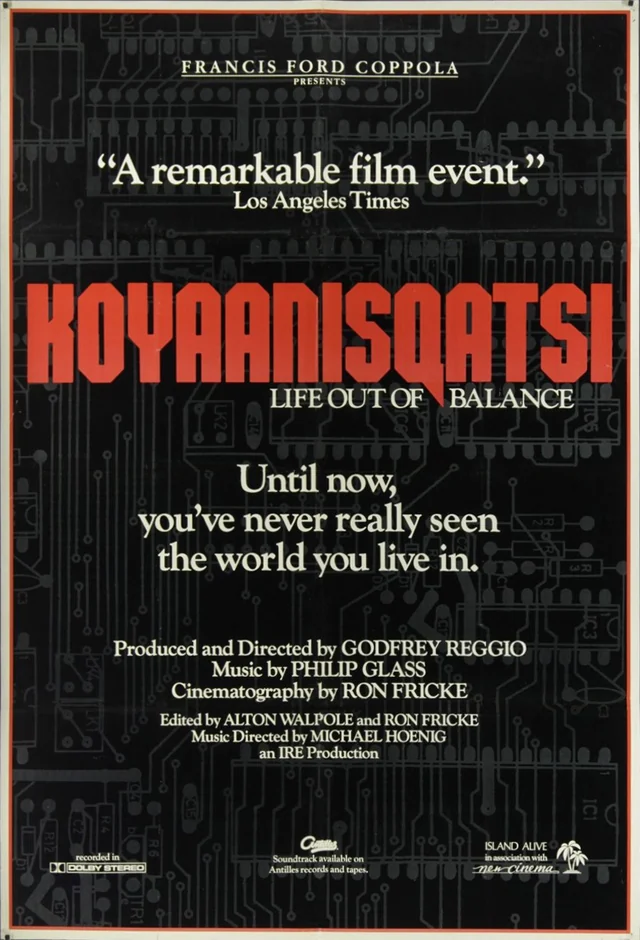
Landscapes, cities and human movement form an experience without dialogue-led narrative. The reference year follows Criterion’s catalogue, which lists 1983.
What to watch for
Notice how image speed and Philip Glass’s music change your sense of time. This documentary is a visual construction, not a neutral inventory. Pay attention to sound and comparisons between natural and urban sequences.
Behind picture and sound
- Cinematography
- Ron Fricke
- Music
- Philip Glass
- Editing
- Alton Walpole, Ron Fricke
Koyaanisqatsi: locating rhythm
Editorial reading · WORLD MOVIES GUIDE ·
These prompts offer interpretation and viewing exercises without revealing the ending. They are distinct from the sourced edition facts in the entry.
Distinguish three speeds
Choose a passage that seems to accelerate. Separate movement within the image, cut frequency and musical rhythm. They can reinforce or counter one another. Keep an example of each rather than attributing all speed to the filmed subject.
A crowd and several paths
With PlayTime, compare following one person in a crowd with perceiving the crowd as rhythm. Does framing, editing or your own choice guide you? Avoid equating documentary with truth and fiction with artifice; examine selected visible relationships.
After viewing: a question to discuss
Which sequence feels fastest: because of image movement, editing or music?
Cinema paths
World cinema
Before watching
Check availability in your country, audio, subtitles and local age rating. This entry does not promise catalogue availability. Editions may differ: consult the source for technical details.
Reference checked :