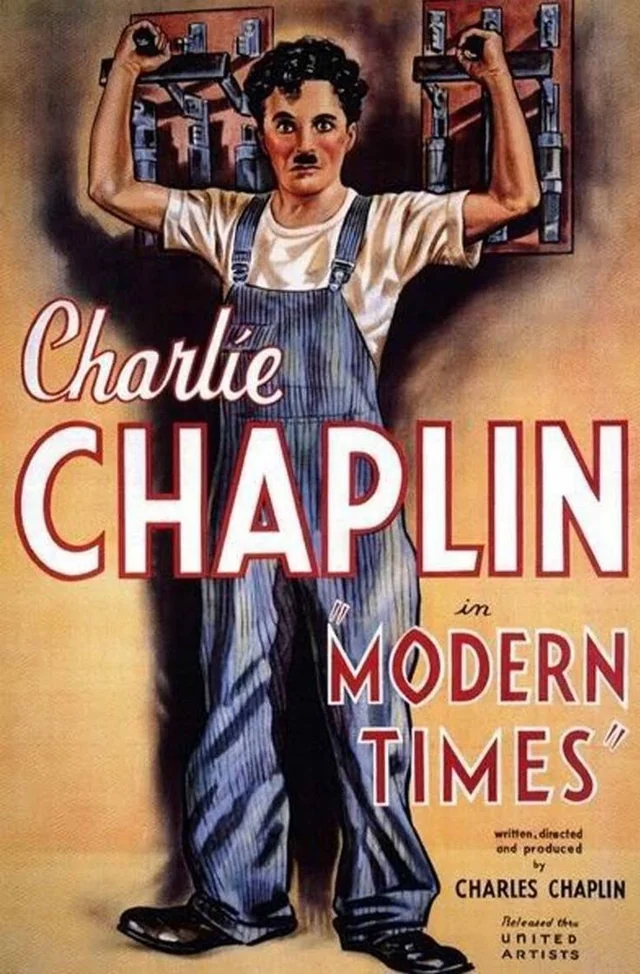
A factory worker tries to find his place in a society shaped by machinery and insecurity.
What to watch for
The body’s rhythm clashes with the factory’s. Notice how a visual gag becomes an idea about work. A useful introduction to physical comedy; the film’s age is not an age rating.
Behind picture and sound
- Screenplay
- Charles Chaplin
- Cinematography
- Roland Totheroh, Ira Morgan
- Music
- Charles Chaplin
Modern Times: when a gesture changes purpose
Editorial reading · WORLD MOVIES GUIDE ·
These prompts offer interpretation and viewing exercises without revealing the ending. They are distinct from the sourced edition facts in the entry.
Follow an imposed rhythm
Identify a repeated action and who sets its pace. Can the person stop, resume or redirect it? Framing changes how repetition reads across a group or one body. Describe a moment when a gesture stops serving its initial purpose.
A gag does not stand alone
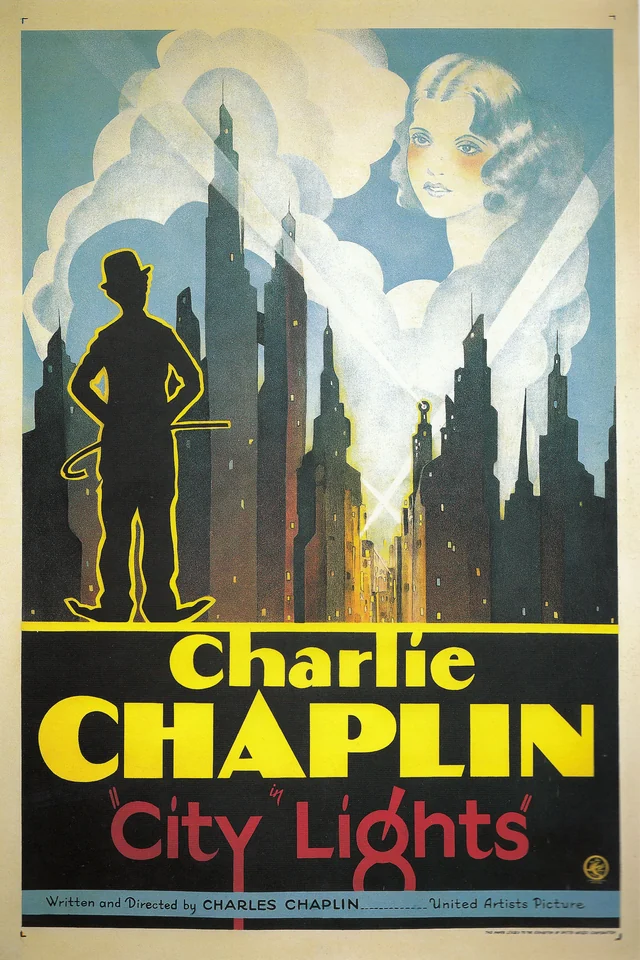
With City Lights, pair a comic gesture with the look, interruption or distance change that follows. Ask how laughter stays connected to a relationship. Compare how surrounding people make a body seem useful, clumsy or vulnerable rather than assigning both films one moral.
After viewing: a question to discuss
Does a useful work gesture become comic elsewhere? Describe the transformation.
Other search titles
Les Temps modernes · Tiempos modernos · Moderne Zeiten · Tempi moderni · Tempos Modernos
Cinema paths
World cinema
Before watching
Check availability in your country, audio, subtitles and local age rating. This entry does not promise catalogue availability. Editions may differ: consult the source for technical details.
Reference checked :