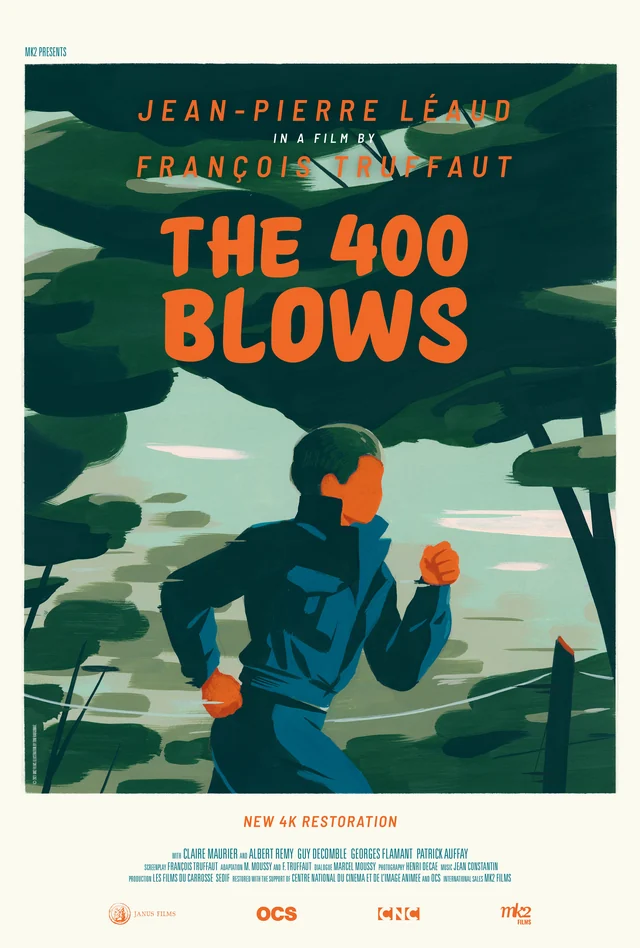
A Parisian teenager clashes with adult expectations and seeks freedom.
What to watch for
Follow the contrast between enclosed school or home spaces and movement through the city. This is a starting point for exploring the French New Wave. Afterwards, consider what the final image reveals and what it leaves open.
Behind picture and sound
- Cinematography
- Henri Decaë
- Music
- Jean Constantin
- Editing
- Marie-Josèphe Yoyotte, Cécile Decugis, Michèle de Possel
The 400 Blows: make room for the child’s gaze
Editorial reading · WORLD MOVIES GUIDE ·
These prompts offer interpretation and viewing exercises without revealing the ending. They are distinct from the sourced edition facts in the entry.
Closeness and distance
Compare a scene close to Antoine with one emphasising surroundings. Observe face, movement or an adult’s reaction. Closeness does not reveal every thought; track attention shifting towards what limits or supports action.
A child does not summarise a country
With Pather Panchali, compare discovery through sound, movement or object. Stay with scenes: two fictional childhoods cannot describe entire societies.
After viewing: a question to discuss
Which scene brings you close to the child, and which keeps you at a distance?
Other search titles
Les Quatre Cents Coups · Les 400 coups
Cinema paths
World cinema
Before watching
Check availability in your country, audio, subtitles and local age rating. This entry does not promise catalogue availability. Editions may differ: consult the source for technical details.
Reference checked :